R.E.P.O. First Hours Guide: Your Opening Session Roadmap
Everybody's first R.E.P.O. session looks the same. Load in. Walk around confused. Pick up a lamp. Drop the lamp because you don't know the controls. Hear a noise. Turn around. See a monster. Scream into your mic, which attracts more monsters. Die. Repeat.
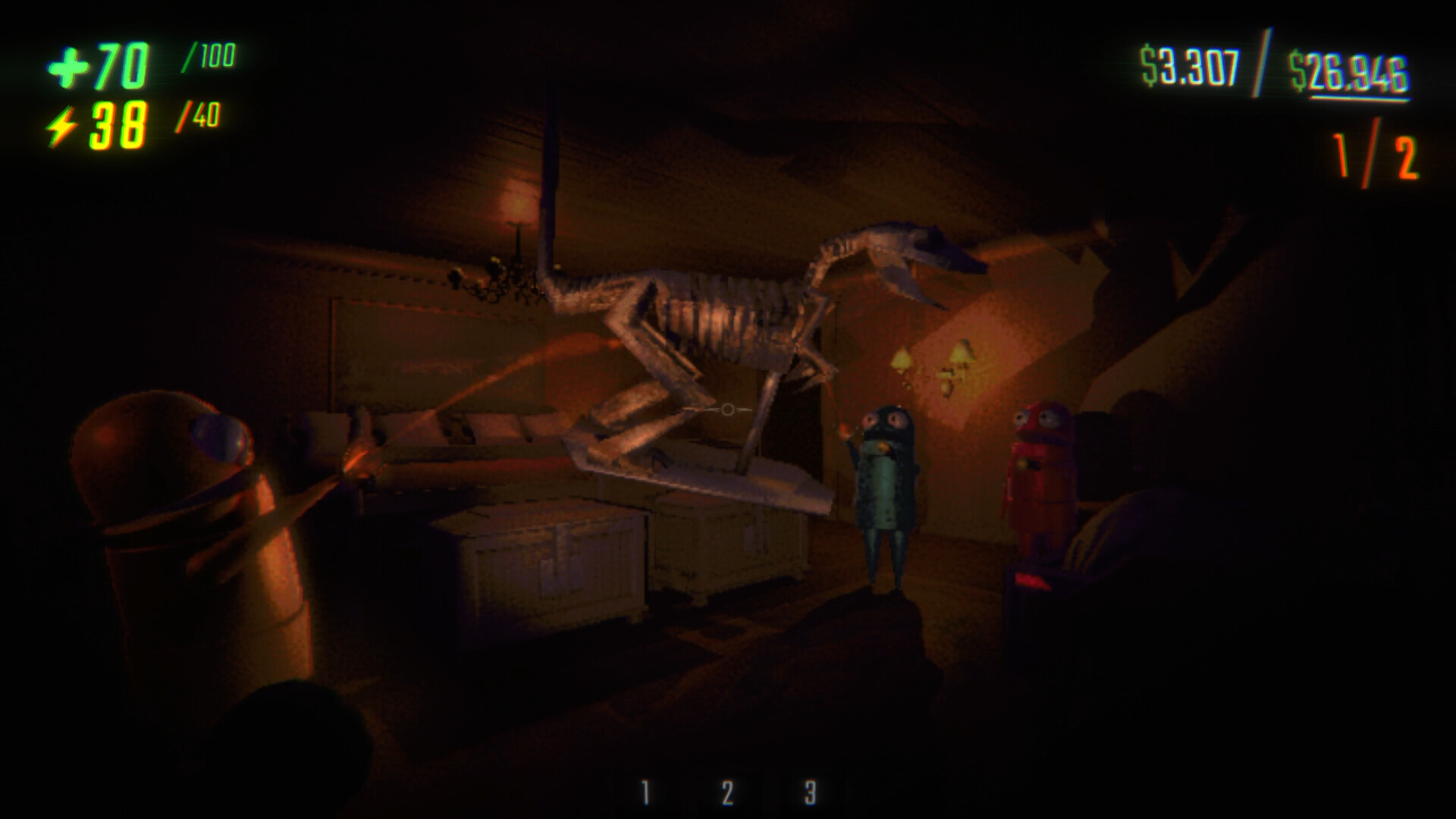
This is normal. This is also avoidable. Here's a roadmap for your first three hours that will get you from confused to competent without the usual twenty-hour death montage.
Hour One: Learn the Physics
Don't try to extract. Don't worry about quotas. Don't even think about monsters. For your first hour, just learn how the physics engine works.
Pick things up. Put them down. Drop them from different heights and watch how they react. Walk while carrying heavy items versus light items. Throw things — gently — and see how they bounce. Stack small items. Try to carry three things at once. Sprint while carrying something fragile and learn why that's a bad idea.
R.E.P.O.'s physics are the game's real language. Everything else — monsters, quotas, extraction — is layered on top of the physics. If you understand how objects behave, you'll play better. If you don't, you'll keep dropping valuables and wondering why you're poor.
The weight system deserves special attention. Every object has a mass value. Your Semibot has a carrying capacity. When you exceed about 60% of your capacity, you start moving slower. When you exceed 80%, you're basically limping. Stamina upgrades increase your capacity, which is why I keep harping on stamina.
Load up a run on Headman Manor on the lowest difficulty. Ignore the quota. Just grab things, carry them around, get a feel for the physics. Let a monster kill you if one shows up — you're here to learn, not to win. After 45 minutes of this, you'll have a much better sense of what's worth carrying and what's not.
Hour Two: Learn the Monsters
Now restart and focus on monster behavior. Don't loot unless it's convenient. Your goal is observation.
Find a monster. Watch it from a safe distance. What's its patrol pattern? Does it pause? Does it turn around at specific points? Does it react to sound, sight, or both? How close can you get before it notices you? What happens when it chases you — how far does it follow?
Each monster type has its own AI personality. Some are predictable once you watch them for a minute. Some have randomness built in that keeps you guessing. The key question for each monster is: can I avoid this thing reliably or do I need to factor it into my loot plan as a real threat?
A good exercise: pick a monster, get it to chase you, then practice escaping. Duck through doors. Break line of sight with furniture. Crouch-walk away after you've broken contact. Learn the timing — how long does a monster search for you after losing sight? Ten seconds? Thirty? Longer?
If a teammate is with you, practice the buddy system. One person baits the monster. The other person watches how it reacts. Then swap. Learning how monsters behave in multiplayer — do they switch targets? do they focus on the closest player? — is different from learning them solo.
Hour Three: Your First Real Run
Now put it together. Load into Headman Manor with a real objective: extract with the quota met.
Set a low bar. Your goal is extraction, not profit. If you meet the minimum quota, leave immediately. Don't push for bonus loot. Don't check "one more room." Extract. The feeling of your first successful extraction is worth more than any amount of in-game currency.
Here's the flow:
Enter. Scout the first few rooms quickly. Identify where the high-value loot is and where the monsters are patrolling. Avoid the monsters. Loot the safe rooms. If you hit quota, extract. If you haven't hit quota after five minutes, you're being too cautious — take some risks.
The most common reason new players fail their first extraction attempt: they wait too long. The soft timer means monster pressure increases over time. A run that's easy at minute two is hard at minute five. A run that's manageable at minute five is nearly impossible at minute eight.
Extract early. Extract often. Build confidence. Then push the limits.
Transitioning to Other Maps
After you've extracted from Headman Manor a few times, try McJannek Station. The open layout requires different positioning. The industrial loot requires different carrying strategies. You'll feel like a beginner again for a run or two. That's normal — each map teaches different skills.
Swiftbroom Academy should come third. The classroom maze teaches close-quarters monster avoidance. You'll die to ambush types you never saw coming. After a few academy runs, you'll start checking corners instinctively, which is a skill that transfers to every map.
Museum of Human Art is the final exam. Don't touch it until you're extracting consistently from the other three maps. The museum demands everything — positioning, timing, communication, weight management, and a tolerance for high-stress extraction phases. It's also the most rewarding map when you pull it off.
Building Your Regular Squad
R.E.P.O. is a different game with a regular group versus randoms. If you can, find three or four people who play at the same times you do. A squad that knows each other's playstyles doesn't need to explain basic callouts. The communication becomes shorthand. The coordination becomes instinctive.
If you are playing with randoms, be the person who communicates. Use pings. Use voice. Call out monsters even if nobody asked. Call out loot even if someone else might have seen it. An over-communicator is slightly annoying. An under-communicator gets people killed.
And be patient. Everyone was new once. The person who accidentally triggered a monster and wiped your squad probably feels worse about it than you do. R.E.P.O. is a comedy game wearing a horror costume. If you can't laugh at the wipes, you're playing the wrong game.